Tel:+86-027-59403931 Ext 8009
  Email: wwqin@oryzogen.com
 Contact Us
 Inquiry Now








Why Rice-Derived Recombinant Human Albumin Is Becoming the Preferred Choice for Xeno-Free Cell Culture
Release time: 2026-09-11
Table of Contents
The global biopharmaceutical industry is undergoing a fundamental transformation in how cell culture processes are designed, validated and scaled. As cell therapies, advanced biologics and next-generation vaccines move from research into clinical and commercial manufacturing, the demand for chemically defined, animal-free raw materials has intensified. Among these critical components, human serum albumin stands out as one of the most widely used supplements in cell culture media, cryopreservation formulations and bioprocessing buffers.
For decades, manufacturers have relied on fetal bovine serum (FBS) or plasma-derived human serum albumin (pHSA) to support cell growth and stability. However, growing regulatory scrutiny, supply chain vulnerabilities and the imperative for process consistency are driving a decisive shift toward rice-derived recombinant human albumin as the preferred choice for xeno-free cell culture applications.
The Limitations of Traditional Albumin Sources
Both FBS and pHSA have served the industry well, but they carry inherent limitations that become increasingly problematic as biopharmaceutical processes advance toward greater standardization and regulatory compliance.
Supply Constraints and Price Volatility FBS production depends on the availability of bovine blood from slaughterhouses, making it subject to geographic, seasonal and regulatory variations. Similarly, pHSA relies on human plasma collection, which faces donor shortages and regional disparities in plasma availability. These supply dynamics translate into price fluctuations and procurement uncertainty for manufacturers planning long-term production schedules.
Batch-to-Batch Variability Biological variability is an intrinsic characteristic of serum and plasma-derived products. Differences in donor health, collection methods and processing conditions can lead to measurable variations in protein composition, growth factor content and functional performance. For cell culture processes that require tight control over critical quality attributes, this variability complicates process optimization, scale-up and technology transfer.
Risk of Adventitious Agents Animal-derived materials carry the risk of introducing viruses, prions and other adventitious agents into bioprocessing workflows. While viral inactivation and clearance steps are standard practice, regulatory agencies continue to emphasize the importance of minimizing animal-origin components, particularly for products intended for direct human administration such as cell therapies and gene therapies.
Regulatory and Ethical Considerations The use of animal-derived supplements faces increasing scrutiny from regulatory bodies, ethics committees and end-users. For cell therapy manufacturers seeking approval in multiple jurisdictions, the ability to demonstrate animal-free manufacturing processes can simplify regulatory filings and enhance market acceptance.
These challenges have created a clear imperative for alternatives that offer greater control over raw material quality, supply chain security and regulatory compliance. Plant-expressed albumin options, including rice-derived recombinant human albumin, have emerged as technically robust and commercially viable solutions for labs and biomanufacturers.
Quick Comparison: Traditional vs. Rice-Derived Albumin
Plasma-Derived Human Serum Albumin (pHSA)
- Source: Human plasma from blood donors
- Variability: Moderate batch-to-batch differences
- Supply: Dependent on plasma collection infrastructure
- Safety: Requires extensive viral clearance steps
- Regulatory: Animal-origin documentation often required
OsrHSA Recombinant Human Serum Albumin
- Source: Rice endosperm expression platform
- Variability: High consistency across batches (≥99% purity)
- Supply: Scalable agricultural production
- Safety: No human or animal pathogens introduced during the production system
- Regulatory: Animal-free documentation supports xeno-free filings
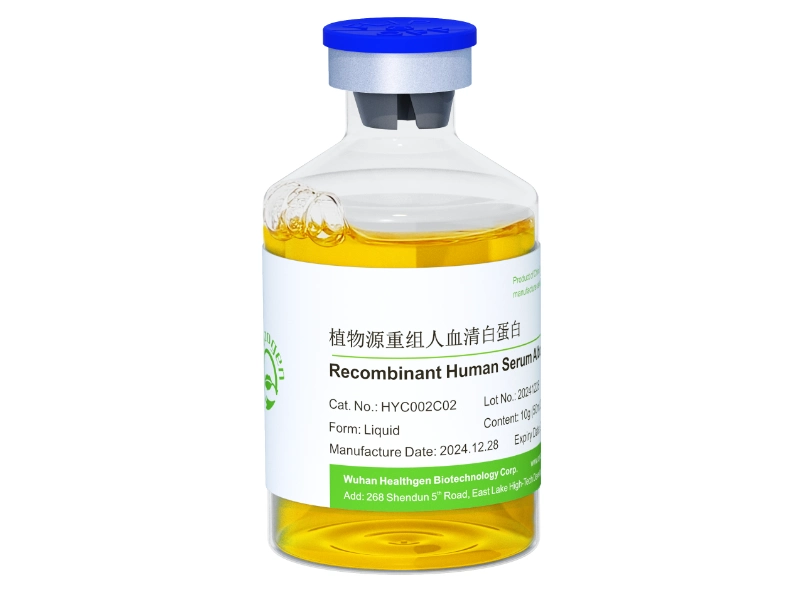
What Makes Rice-Derived Recombinant Human Albumin Different
OsrHSA Recombinant Human Serum Albumin is manufactured using plant-based rice endosperm expression technology. This production approach leverages the natural protein storage capacity of rice grains to achieve high protein yields and consistent quality. Multiple suppliers have developed rice expression platforms to produce this class of protein, while different product grades exist to fit diverse lab and production workflows.
Animal-Free and Chemically Defined Rice-derived recombinant human albumin is manufactured without any animal-derived raw materials, eliminating the risk of introducing animal pathogens or immunogenic components into cell culture processes. The production process is tightly controlled, with defined inputs and standardized purification steps that ensure consistent product quality across batches. This characteristic makes it a strong candidate as recombinant human serum albumin for cell culture in xeno-free workflows.
High Purity and Consistent Quality With purity levels reaching ≥99% (SDS-PAGE, HPLC) and low endotoxin specifications, rice-expressed albumin provides a highly consistent raw material profile. Batch-to-batch consistency is critical for process validation and regulatory filings, particularly for cell and gene therapy products where variability in raw materials can impact product quality and patient safety.
Note: Endotoxin value varies by product grade, please refer to the latest product datasheet for exact parameters.
Functional Equivalence to Plasma-Derived Albumin Comparative studies have shown that OsrHSA Recombinant Human Serum Albumin is structurally and biochemically equivalent to pHSA, with comparable binding capacity and cell growth promotion performance. This functional equivalence allows manufacturers to transition from plasma-derived albumin to rice-derived recombinant human albumin without compromising process performance. It is widely evaluated as recombinant human serum albumin for cell culture in research and biomanufacturing.
Scalable and Secure Supply Rice-based production enables large-scale manufacturing with stable output, addressing the supply bottlenecks often associated with plasma collection. Scalable agricultural production models reduce reliance on limited human plasma supplies for teams sourcing recombinant human serum albumin for cell culture.
Key Performance Indicators of Rice-Derived Recombinant Human Albumin
Specifications differ across product grades. Below represents typical parameters for premium liquid grade OsrHSA Recombinant Human Serum Albumin:
- Purity: ≥99% (SDS-PAGE, HPLC)
- Endotoxin: <0.125 EU/mg
- Concentration (Liquid): 180–210 mg/mL
- Storage (Liquid): 2–8°C, up to 36 months
- Stabilizer: Acetyl tryptophan (no sodium caprylate)
- Production Capacity: This manufacturer targets 130 tons/year bulk capacity
- Source: Rice grain (Oryza Sativa) via rice endosperm expression platform
Applications in Xeno-Free Cell Culture
Cell Therapy and Gene Therapy Manufacturing For autologous and allogeneic cell therapies, including CAR-T cells, mesenchymal stem cells and induced pluripotent stem cells (iPSCs), the use of animal-free raw materials is increasingly becoming a regulatory expectation. Rice-derived recombinant human albumin serves as a key component in xeno-free cell culture media, providing essential functions such as osmotic balance, nutrient transport and protection against shear stress. It is one popular option of recombinant human serum albumin for cell culture in advanced therapy development.
Stem Cell Culture and Regenerative Medicine Stem cell lines, particularly pluripotent and multipotent populations, are highly sensitive to culture conditions. The consistency and purity of rice-expressed albumin make it suitable for maintaining stem cell pluripotency, supporting differentiation protocols and enabling cryopreservation without compromising cell viability or function.
Vaccine Production In viral and subunit vaccine manufacturing, albumin serves multiple roles, including stabilizing viral particles, protecting proteins from degradation and enhancing immunogenicity. Rice-derived recombinant human albumin has been adopted in vaccine formulations as a stabilizer and carrier protein, offering the dual benefits of functional performance and supply security.
In Vitro Diagnostic (IVD) Reagents and Medical Device Coatings Beyond bioprocess cell culture, rice-expressed albumin can be applied in medical device coatings and in vitro diagnostic reagents. The consistent quality and animal-free profile support applications where product safety and regulatory compliance are paramount.
A Decision-Maker’s Perspective: Evaluating Rice-Derived Albumin
Process Development Manager (CAR-T Program) Key questions might include: Will OsrHSA Recombinant Human Serum Albumin support comparable cell expansion rates to our current pHSA-based process? What concentration range should we test in our media optimization studies?
Quality Assurance Leader (Raw Material Qualification) Focus areas typically include: Certificate of analysis review for purity, endotoxin and residual host cell protein Regulatory supporting documentation for customer filings and audits
Supply Chain Manager (Global Procurement) Priorities often center on: Lead times for sample delivery and bulk orders Shelf life and storage requirements across multiple manufacturing sites
Understanding these perspectives helps manufacturers build cross-functional alignment when evaluating rice-derived recombinant human albumin as an alternative raw material.
Technical Considerations for Process Integration
Protein Concentration and Formulation OsrHSA Recombinant Human Serum Albumin is available at concentrations of 180–210 mg/mL in liquid format, with powder reconstitution options. The formulation uses acetyl tryptophan as a stabilizer rather than sodium caprylate, which is particularly relevant for fatty acid-free grades used in sensitive cell culture workflows.
Storage and Stability Liquid rice-derived recombinant human albumin can be stored at 2–8°C for up to 36 months, with recommendations to avoid repeated freeze-thaw cycles. This stability profile supports both small-scale research and large-scale manufacturing operations, reducing the burden on cold chain logistics and inventory management for teams purchasing recombinant human serum albumin for cell culture.
Regulatory Documentation For biopharma customers, access to certificates of analysis and technical datasheets is essential for regulatory submissions. Most suppliers of rice-expressed albumin provide comprehensive documentation packages to support customer filings and quality audits.
Building a Xeno-Free Cell Culture Workflow: A Phased Approach
Phase 1: Screening and Qualification The initial phase involves screening rice-derived recombinant human albumin against existing plasma-derived or FBS-based processes. This includes reviewing technical datasheets, certificates of analysis and comparative data from the supplier.
Phase 2: Side-by-Side Comparison Once initial screening confirms compatibility, manufacturers proceed to side-by-side comparisons of cell growth, viability and product yield in parallel cultures. This phase generates the data needed to justify the transition from traditional albumin sources to plant-derived alternatives such as OsrHSA Recombinant Human Serum Albumin.
Phase 3: Process Optimization With comparative data in hand, manufacturers can optimize media formulations, feeding strategies and process parameters to fully leverage the benefits of rice-derived recombinant human albumin.
Phase 4: Scale-Up Validation Process performance at laboratory scale must be confirmed at pilot and manufacturing scale. This includes assessing mixing dynamics, mass transfer, temperature control and other parameters that can influence cell culture performance at larger volumes.
Phase 5: Regulatory Documentation For products requiring regulatory approval, manufacturers compile documentation packages that include raw material specifications, supplier qualifications, comparative data and process validation reports.
The Strategic Advantage of Plant-Based Production
Reduced Dependency on Plasma Supply Chains Plasma collection is subject to geographic, seasonal and regulatory variations that can impact supply security. By evaluating plant-expressed albumin such as rice-derived recombinant human albumin, manufacturers reduce their dependency on plasma supply chains and gain greater control over raw material procurement.
Lower Risk of Viral Contamination Plant-based expression systems do not harbor human or animal pathogens, reducing the risk of viral contamination compared to mammalian cell culture or plasma-derived products. This safety benefit is one major reason many researchers select recombinant human serum albumin for cell culture.
Alignment with Sustainability Goals As biopharmaceutical companies increasingly prioritize sustainability, rice-expressed albumin offers a lower-impact alternative to traditional production methods.
Looking Ahead: The Future of Xeno-Free Cell Culture
The shift toward xeno-free, chemically defined cell culture is accelerating. Regulatory agencies and end-users increasingly expect biopharmaceutical products to be manufactured without animal-derived components. Rice-derived recombinant human albumin offers a technically robust and commercially viable path forward, backed by comparative data, regulatory documentation and scalable production capacity. For manufacturers evaluating raw material options, the question is no longer whether to transition, but how to do so efficiently.