Tel:+86-027-59403931 Ext 8009
  Email: wwqin@oryzogen.com
 Contact Us
 Inquiry Now








cGMP-Grade Recombinant Albumin: What DMF 29648 Means for Your Biopharma Filing
Release time: 2026-09-21
Table of Contents
For biopharmaceutical developers, selecting a recombinant albumin is not only a formulation or process-development decision. It can also affect raw-material qualification, supplier oversight, quality documentation, and the supporting information available for regulatory submissions.
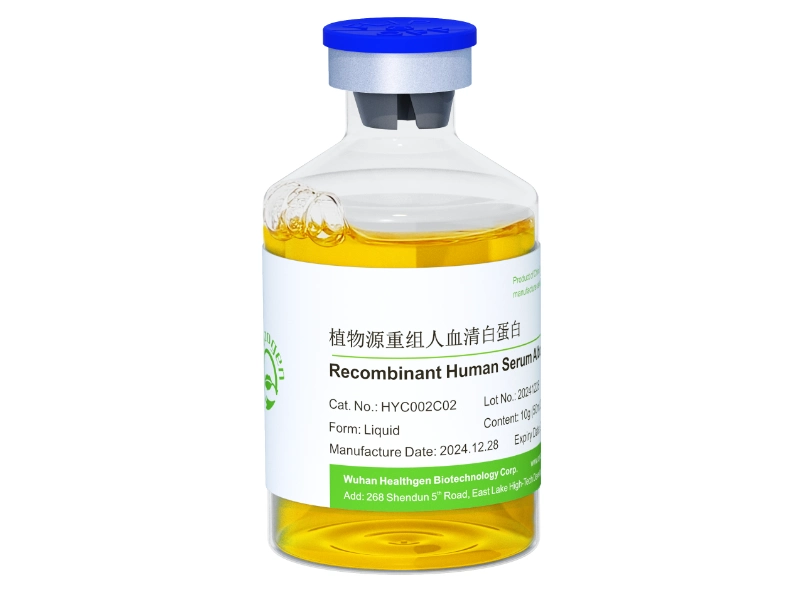
When a recombinant human serum albumin material is manufactured under cGMP expectations and supported by a Drug Master File (DMF), it may provide a more structured documentation pathway for teams developing vaccines, viral vectors, cell therapies, gene therapies, and other biologic products. DMF 29648 is associated with OsrHSA Premium Liquid, a rice-derived recombinant human serum albumin product listed for relevant biopharmaceutical applications.
Why Recombinant Albumin Documentation Matters
Recombinant human serum albumin may be used as a raw material, process aid, excipient candidate, stabilizer, or defined protein supplement in selected biopharmaceutical workflows. Depending on the intended application, the material can influence process consistency, product recovery, formulation behavior, stability assessment, and raw-material risk evaluation.
For a development program moving toward investigational, clinical, or commercial manufacturing, technical performance is only one part of the decision. Development teams also need to understand the material’s source, manufacturing controls, specifications, analytical testing, change-management process, and available regulatory-support documentation.
Plant-made recombinant albumin can be relevant to organizations seeking a defined alternative to plasma-derived or animal-derived albumin. Healthgen Biotech describes its recombinant protein portfolio as being produced through a rice endosperm cell-specific expression platform, with products developed for applications including cell culture, drug carriers, vaccine stabilizers, cell cryopreservation agents, and medical-device embedding agents.
What a DMF Means in Biopharma Development
A Drug Master File is a confidential submission that can contain detailed information about facilities, manufacturing processes, raw materials, intermediates, drug substances, drug products, packaging materials, or other components relevant to regulated pharmaceutical development. In practice, a DMF can allow a supplier to provide supporting information to a regulatory authority without publicly disclosing confidential manufacturing details to the drug-product sponsor.
Supporting a More Structured Filing Strategy
For a sponsor using a qualified raw material in a regulated program, a DMF may support the review of information that is relevant to material manufacture and controls. The sponsor remains responsible for its own product development, formulation rationale, manufacturing process, quality strategy, and regulatory submission. A DMF does not automatically establish that a material is suitable for every application or that a finished product will receive regulatory approval.
Instead, access to a referenced DMF may help a sponsor and its regulatory team organize supplier-related documentation within a broader filing strategy. The exact role of a DMF should be discussed with the material supplier and assessed according to the requirements of the intended regulatory authority and the specific development stage.
DMF 29648 and OsrHSA Premium Liquid
Healthgen Biotech identifies OsrHSA Premium Liquid as a rice-grain-derived recombinant human serum albumin associated with DMF No. 29648. The company also lists the material for viral-vaccine manufacturing applications, including virus purification, virus concentration, and formulation protection.
For developers, the practical value of this information is that a supplier-supported documentation package may be available for review or reference through appropriate regulatory and supplier-management channels. The relevance of DMF 29648 should be evaluated based on the intended use of the albumin, the jurisdiction, the sponsor’s submission type, and the documentation requirements of the development program.
cGMP Grade and Raw-Material Assessment
The term cGMP is commonly associated with manufacturing systems designed to provide appropriate controls over production, testing, documentation, and quality oversight. When evaluating a recombinant albumin for biopharmaceutical use, developers should look beyond a single label and assess the complete material package.
Source and Expression Platform
Material origin is an important part of raw-material assessment. Recombinant albumin expressed in a plant-based system can be relevant for programs seeking to reduce dependence on plasma-derived materials or animal-origin inputs.
A cGMP recombinant human albumin liquid may be considered for workflows that require a ready-to-use albumin format together with documented manufacturing and quality attributes. The suitability of a liquid albumin format should be assessed against formulation concentration, storage requirements, microbial-control strategy, dilution procedures, and compatibility with the intended process or product.
Material Quality Attributes
Key albumin quality attributes may include identity, purity, molecular integrity, aggregate profile, endotoxin control, bioburden controls where applicable, appearance, concentration, pH, and lot-to-lot consistency. The relevant acceptance criteria should be determined by the material’s intended role in the sponsor’s manufacturing process or formulation.
For example, a process aid used during a purification step may require a different evaluation approach from an albumin included in a final drug-product formulation. Developers should define the material’s function early and establish appropriate incoming-material specifications, risk assessments, and qualification plans.
Supplier Change Control and Traceability
Quality evaluation also includes the supplier’s ability to communicate material changes, maintain traceability, manage deviations, and provide appropriate documentation. These factors may become increasingly important as a program advances from research-scale studies to clinical and commercial manufacturing.
For regulated programs, the sponsor should establish a supplier qualification process that is appropriate to the material’s criticality and intended use. This may include technical questionnaires, quality agreements, audit activities, certificate-of-analysis review, sample evaluation, lot qualification, and defined change-notification expectations.
Where Recombinant Albumin May Be Evaluated
Recombinant albumin may be evaluated across multiple biopharmaceutical workflows. Its role is application-specific and should be confirmed using relevant analytical methods, process data, and stability studies.
| Biopharma workflow | Potential role of recombinant albumin | Key assessment focus |
|---|---|---|
| Cell culture | Defined protein supplement in serum-free or animal-component-free conditions | Cell growth, viability, productivity, and process consistency |
| Viral-vector manufacturing | Process component or formulation candidate during selected upstream, downstream, or bulk-handling steps | Vector recovery, infectivity, potency, particle integrity, and hold-time performance |
| Vaccine manufacturing | Potential support material for virus purification, concentration, or formulation studies | Antigen integrity, recovery, potency, and storage stability |
| Final formulation development | Protein excipient candidate in a defined buffer system | Compatibility, adsorption control, aggregation profile, and stability under intended storage conditions |
| Analytical and supporting research | Defined protein material for selected assay or development workflows | Background behavior, reproducibility, interference profile, and method compatibility |
Choosing an OsrHSA Product Format
Albumin selection should be based on the intended application, required physical format, quality attributes, process conditions, and development-stage documentation needs. A product should be assessed in the actual or representative workflow rather than selected only on a general product description.
OsrHSA Premium Liquid Recombinant Human Albumin
OsrHSA Premium Liquid is a ready-to-use recombinant human serum albumin format derived from rice grains. A liquid product may be relevant where direct addition to aqueous media, process buffers, bulk solutions, or formulation screening systems is preferred.
A DMF 29648 recombinant albumin excipient may be relevant to sponsors evaluating a liquid recombinant albumin with supplier-supported regulatory documentation for a specific biopharmaceutical use case. The sponsor should confirm the scope of available documentation, eligibility for DMF reference, and alignment with the applicable filing strategy before relying on it within a regulated submission.
OsrHSA Premium Powder Recombinant Human Albumin
OsrHSA Premium Powder is listed as an excipient-grade recombinant human albumin produced from rice grain. The product page describes a powder format, purity specifications, low endotoxin information, cGMP manufacturing, and use areas that include virus-vaccine production, cell and gene therapy, IVF-related media, regenerative medicine, tissue storage, and medical-device applications.
A animal free recombinant albumin excipient powder may be considered where a development team prefers a reconstitutable albumin material for controlled buffer preparation, formulation development, selected manufacturing operations, or storage planning. Reconstitution procedures, solution stability, filtration compatibility, and final-use concentration should be evaluated for the intended process.
OsrHSA Advanced Recombinant Human Albumin
OsrHSA Advanced is included in the Healthgen Biotech recombinant albumin product portfolio. Product selection should be guided by the current product specification, intended application, relevant quality attributes, and technical documentation available from the supplier.
A rice derived recombinant human albumin for cell culture may be evaluated in serum-free or animal-component-free cell-culture development where teams need to assess its impact on cell viability, growth behavior, productivity, and downstream product quality. Results should be established using the specific cell line, culture conditions, and bioprocess platform in use.
How to Use DMF Information Responsibly
A DMF can be a valuable component of a supplier-documentation strategy, but it does not replace product-specific development work. Sponsors should avoid treating DMF availability as a universal qualification of a raw material for every formulation, process, jurisdiction, or clinical stage.
Confirm the Scope of Support
Before incorporating a material into a regulatory strategy, confirm with the supplier whether the relevant DMF can be referenced, what supporting documentation is available, and whether there are process-specific or geographic considerations. The sponsor’s regulatory team should determine how supplier information fits within the overall filing package.
Build Product-Specific Evidence
Even when a raw material is manufactured under cGMP expectations and supported by a DMF, the drug-product sponsor remains responsible for demonstrating that the material is suitable in its own process. This may include compatibility studies, stability studies, process-performance data, impurity-risk assessments, viral-safety assessments where relevant, and justification of the material’s control strategy.
Maintain a Lifecycle Perspective
Raw-material selection should account for the full product lifecycle. Early-stage developers should consider how a selected albumin may be qualified, supplied, documented, and controlled as programs advance. A well-planned strategy can help reduce the likelihood of avoidable material changes or comparability work later in development.
A Practical Documentation Consideration
For biopharmaceutical developers, cGMP manufacturing status and DMF availability are relevant considerations when selecting a recombinant albumin, but they are not standalone indicators of application suitability. The material must still be assessed in the context of its intended function, process conditions, formulation design, analytical requirements, and regulatory strategy.
Healthgen Biotech develops plant-made recombinant proteins using a rice endosperm cell-specific expression platform. Its OsrHSA portfolio includes recombinant albumin formats for applications such as cell culture, biopharmaceutical development, viral-vaccine-related workflows, and formulation or stabilization studies. The appropriate product and documentation pathway should be confirmed through current technical materials and application-specific evaluation.
Frequently Asked Questions
Does DMF 29648 mean that a finished biopharmaceutical product is automatically approved?
No. A DMF may provide confidential supplier-related information for regulatory review when properly referenced, but it does not grant approval to a finished drug product, vaccine, viral vector, or cell therapy. The sponsor remains responsible for its own product data, manufacturing controls, quality strategy, safety assessment, and regulatory submission.
Can cGMP-grade recombinant albumin be used in any vaccine or viral-vector formulation?
Not automatically. A cGMP-grade material may be considered for formulation or process-development use, but compatibility must be demonstrated for the specific antigen, viral vector, buffer system, concentration, container, storage condition, and manufacturing workflow. Relevant testing may include recovery, potency, particle integrity, stability, and process-performance studies.
Why might a biopharma company consider rice-derived recombinant albumin?
Rice-derived recombinant albumin may be relevant for teams seeking a defined, animal-origin-free recombinant material for selected cell-culture, process-development, vaccine, viral-vector, or formulation workflows. The decision should consider technical performance, quality attributes, supply planning, available documentation, and the requirements of the intended application.