Tel:+86-027-59403931 Ext 8009
  Email: wwqin@oryzogen.com
 Contact Us
 Inquiry Now








NMPA Approval Milestone: What Olbumin®’s Drug License (S20250039) Means for Global Biopharma Suppliers
Release time: 2026-09-28
Table of Contents
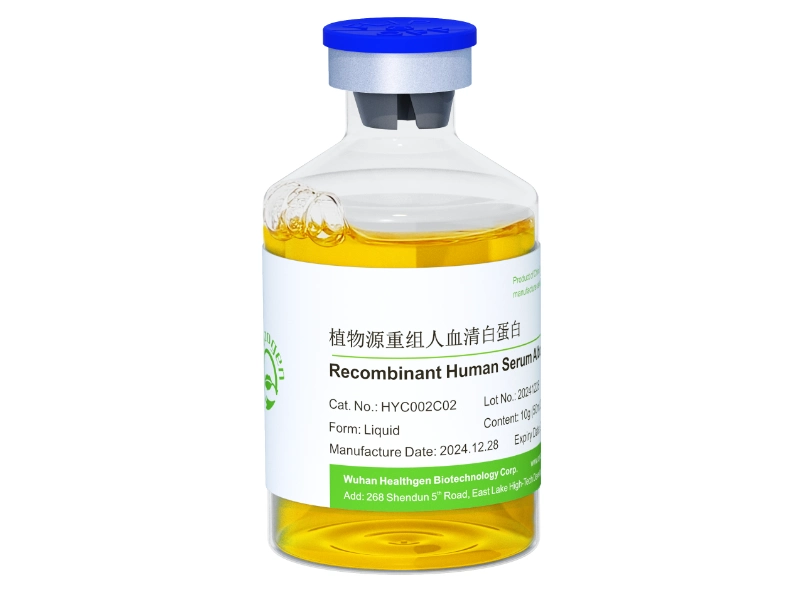
The approval of Olbumin® Recombinant Human Albumin Injection (Oryza Sativa) by China’s National Medical Products Administration (NMPA) marks an important development for plant-made biopharmaceuticals and recombinant human albumin manufacturing. Healthgen Biotech lists Olbumin® under National Drug Approval No. S20250039, with a 20%, 50 mL presentation containing 10 g per vial.
For global biopharma suppliers, the milestone is relevant not only because it concerns a recombinant human albumin injection, but also because it demonstrates a regulatory pathway for a rice-derived recombinant protein produced through a plant-based expression platform. The approval does not automatically establish regulatory acceptance in other markets, nor does it determine suitability for every supplier or drug-development program. It does, however, provide a practical reference point for organizations assessing plant-made proteins, defined biological raw materials, and alternative supply approaches for biopharmaceutical development.
Understanding the Olbumin® Approval
Olbumin® is a recombinant human albumin injection derived from Oryza sativa. According to Healthgen Biotech, the product has received marketing approval in China under National Drug Approval No. S20250039. The company describes the approved product as a 20% recombinant human albumin injection in a 50 mL vial, equivalent to 10 g of albumin per vial.
Healthgen Biotech’s website identifies hypoalbuminemia in liver cirrhosis as an indication for Olbumin®. A separate official product page refers to hypoproteinemia. These descriptions should be interpreted within the approved Chinese label and the current information supplied by the manufacturer. Product indication, labeling, registration status, and permitted promotion may differ by jurisdiction.
A Regulatory Milestone for Plant-Made Pharmaceuticals
Recombinant proteins are commonly produced in microbial, mammalian, or other expression systems. A rice endosperm-based platform represents a different production approach. Healthgen Biotech states that its OryzHiExp platform uses rice endosperm cell-specific protein expression to develop plant-made pharmaceuticals and recombinant protein raw materials.
For global suppliers, a regulatory milestone involving a plant-made recombinant human albumin product may be relevant when evaluating future sourcing options, manufacturing diversification, and development strategies for recombinant protein materials. However, each material and final drug product must be assessed independently against the applicable quality, safety, manufacturing, and regulatory requirements.
What Approval Does and Does Not Mean
An NMPA drug approval confirms that a specific product has completed the applicable review and authorization process in China for its approved use. It does not mean that all recombinant albumin products from the same manufacturer are approved medicines, that raw-material products are approved for direct human use, or that the product is automatically authorized outside China.
For biopharma suppliers, the milestone should therefore be understood as product-specific regulatory evidence. It may be useful context in supplier evaluation, but it does not replace product-specific qualification, technical assessment, quality agreements, stability studies, or regulatory planning for a separate development program.
Why the Milestone Matters for Global Suppliers
Global biologics manufacturing depends on reliable access to critical raw materials, including proteins used in cell culture, formulation development, cryopreservation, analytical workflows, and selected downstream processes. Human albumin has long been relevant in these areas, while plasma-derived supply can involve sourcing, capacity, traceability, and risk-management considerations.
Interest in Defined Recombinant Materials
Recombinant protein materials may be evaluated when developers seek more defined inputs for their manufacturing systems. For appropriate applications, a recombinant material can support efforts to establish documented quality attributes, supplier controls, and consistent raw-material specifications.
A plant derived recombinant human albumin supplier may be relevant to organizations reviewing alternative sourcing models for biopharmaceutical process development. The selection process should include a detailed review of product quality attributes, manufacturing controls, supply capacity, available technical documentation, and performance in the intended process.
Supply-Chain Diversification Considerations
Supply continuity is an important part of raw-material strategy. Biopharma suppliers may assess whether an albumin source can support the expected scale, geographic distribution, storage requirements, change-control process, and lifecycle needs of a development program.
A plant-based expression platform may be considered as one possible production model within a broader supplier-diversification strategy. The decision should be based on documented supply capabilities and quality systems rather than on the expression host alone.
Quality and Regulatory Documentation
For regulated biopharmaceutical development, developers need more than a product description. They may require specifications, certificates of analysis, stability information, traceability records, quality agreements, change-notification procedures, and documentation appropriate to their regional filing strategy.
The approval of a finished recombinant albumin drug in one market may be relevant background for supplier due diligence. Still, the sponsor remains responsible for demonstrating that a selected raw material or excipient is appropriate for its own product, process, and regulatory submission.
Relevance Across Biopharmaceutical Workflows
Healthgen Biotech identifies recombinant proteins in its portfolio as raw materials for cell culture, drug carriers, vaccine stabilizers, cell cryopreservation agents, and medical-device embedding agents. The actual role of a specific material should be confirmed through application-specific development work.
| Workflow area | Potential role of recombinant protein materials | Key supplier-evaluation focus |
|---|---|---|
| Cell culture | Defined supplement candidate for serum-free or animal-component-free workflows | Cell growth, viability, productivity, consistency, and lot performance |
| Cell and gene therapy | Material for selected cell-culture, cryopreservation, or virus-handling studies | Compatibility with cells or vectors, recovery, potency, and workflow robustness |
| Vaccine development | Potential process or formulation material for virus-related manufacturing studies | Antigen or vector integrity, recovery, potency, and stability |
| IVD development | Defined recombinant protein material for selected assay or reagent workflows | Assay background, interference profile, reproducibility, and reagent stability |
| Medical-device development | Candidate material for selected coating or embedding-related research | Material compatibility, performance testing, and applicable documentation |
Related Recombinant Protein Options
Supplier assessment should match the material to the intended technical role. Healthgen Biotech’s product portfolio includes recombinant human albumin as well as other recombinant proteins that may be considered for specific life-science and biopharmaceutical workflows.
OsrhTF Recombinant Human Transferrin Holo
Human transferrin is an iron-binding glycoprotein involved in iron transport. In defined cell-culture systems, transferrin may be evaluated as a component of serum-free or reduced-serum media development where iron availability is a relevant factor.
A recombinant human holo transferrin for cell culture may be considered during development of defined media systems. Its suitability should be assessed using the specific cell line, medium composition, culture mode, target productivity, and downstream quality requirements of the process.
OsrhFN Recombinant Human Fibronectin
Fibronectin is an extracellular-matrix protein associated with cell adhesion, growth, migration, and differentiation. In life-science research and selected cell-culture workflows, recombinant fibronectin may be assessed as a defined matrix or coating material.
A recombinant human fibronectin cell culture coating may be evaluated where a development workflow requires a defined surface-support material for cell attachment or expansion studies. Performance should be established through application-specific experiments, including cell adhesion, morphology, growth, and process reproducibility assessments.
OsrHSA Precise Recombinant Human Albumin
OsrHSA Precise is listed by Healthgen Biotech as a reagent-grade recombinant human albumin derived from rice grain. The official product page identifies applications including immunoassay experiments, diagnostic enzyme, antigen and antibody stabilization, sample diluent preparation, blocking reagents, protein quantitative standards, and plasma matrix control.
An animal-free albumin diagnostic reagent may be evaluated in selected diagnostic-reagent and immunoassay-development workflows where a defined recombinant albumin source is required. Use in an assay should be confirmed through background, signal, interference, precision, and stability studies appropriate to the intended analytical method.
Supplier Qualification After a Regulatory Milestone
A product approval can be a useful point of reference during supplier assessment, but it should be integrated into a structured qualification program. The criticality of the material, intended use, product-development stage, and regional requirements should determine the depth of supplier review.
Confirm Product-Specific Documentation
Suppliers should provide documentation appropriate to the intended raw material and application. This can include product specifications, certificates of analysis, handling guidance, storage information, stability data, relevant quality-system information, and change-notification practices.
Where a material will support a regulated program, the development team should confirm which documentation is available for that specific product rather than assuming that a finished-drug approval applies to all materials in a supplier’s portfolio.
Evaluate Application-Specific Performance
Even when a product is derived from an established recombinant protein platform, it must be evaluated in the actual process or formulation. This can include studies of cell growth, product recovery, purification performance, formulation compatibility, stability, potency, analytical-method performance, or other relevant quality attributes.
For example, a recombinant albumin selected for cell-culture supplementation may require different testing from a recombinant protein selected for an IVD blocking reagent or a viral-vector formulation study.
Plan for the Product Lifecycle
Supplier selection should consider long-term needs as well as early development. Teams may assess scale-up potential, supply continuity, packaging formats, shipping conditions, quality agreements, technical support, and management of future manufacturing or specification changes.
A lifecycle approach can help reduce the risk of unnecessary material changes as a program advances from research to clinical development and commercial manufacturing.
A Broader Signal for Plant-Made Biopharma
Olbumin®’s NMPA approval under S20250039 is a product-specific milestone for recombinant human albumin injection produced from rice. For global biopharma suppliers, it offers a relevant example of plant-made pharmaceutical development reaching marketing authorization in China.
Healthgen Biotech develops plant-made recombinant proteins using its rice endosperm cell-specific expression platform, OryzHiExp. Alongside its approved Olbumin® product, the company lists recombinant protein raw materials for cell culture, vaccine-related workflows, cell and gene therapy, IVD, medical-device, and related life-science applications. Product selection should remain based on current technical documentation, applicable regulatory requirements, and application-specific qualification.
Frequently Asked Questions
Does NMPA approval No. S20250039 mean that Olbumin® is approved in other countries?
No. National Drug Approval No. S20250039 applies to the approved Olbumin® product in China. Authorization in another country or region requires review by the relevant regulatory authority under its own requirements. Global suppliers should not treat approval in one market as automatic authorization in another market.
Does the Olbumin® approval make all Healthgen recombinant protein products approved for direct human use?
No. The approval applies to the specific Olbumin® recombinant human albumin injection. Other products in the portfolio may be raw materials, excipient-grade materials, reagent-grade materials, or research and manufacturing products with distinct intended-use statements. Each product should be evaluated according to its own documentation and approved or stated application scope.
Why is a plant-made recombinant human albumin approval relevant to biopharma suppliers?
It may provide a useful reference point for organizations assessing plant-based recombinant protein manufacturing, alternative albumin sourcing, and supplier quality strategies. However, each supplier and sponsor must still conduct product-specific technical evaluation, raw-material qualification, quality review, and regulatory planning for its own application.